C_S4CPB Lernhilfe & C_S4CPB Prüfungsfrage
Wiki Article
Die Welt verändert sich. Daher müssen mit den Veränderungen Schritt halten. Wir ZertSoft beachten immer die vielfältige Veränderungen der SAP C_S4CPB Prüfung. Wir haben schon zahlreiche Prüfungsaufgaben der SAP C_S4CPB Prüfung von mehreren Jahren geforscht. Jetzt können wir Ihnen die wertvolle Prüfungsunterlagen der SAP C_S4CPB bieten. Nach Ihrem Kauf geben Ihnen rechtzeitigen Bescheid über die Aktualisierungsinformationen der SAP C_S4CPB. Dieser Dienst ist kostenlos, weil die Gebühren für die Unterlagen bezahlen, haben Sie schon alle auf SAP C_S4CPB bezügliche Hilfen gekauft.
Vielleicht können Sie auch die relevanten SAP C_S4CPB Schulungsunterlagen in anderen Büchern oder auf anderen Websites finden. Aber wenn Sie die Produkte von ZertSoft mit ihnen vergleichen, würden Sie herausfinden, dass unsere Produkte mehr Wissensgebiete umfassen. Sie können auch im Internet teilweise die Fragen und Antworten zur SAP C_S4CPB Zertifizierungsprüfung kostenlos herunterladen, so dass Sie die Qualität unserer Produkte testen können. Die Gründe, dass ZertSoft exklusiv umfassende Materialien von guter Qualität bieten können, liegt darin, dass wir ein exzellentes Expertenteam hat. Sie bearbeiten die neuesten Fragen und Antworten zur SAP C_S4CPB Zertifizierungsprüfung nach ihren IT-Kenntnissen und Erfahrungen. Deshalb sind die Fragen und Antworten zur SAP C_S4CPB Zertifizierungsprüfung von ZertSoft bei den Kandidaten ganz beliebt.
C_S4CPB Prüfungsfrage & C_S4CPB Online Prüfung
Im ZertSoft können Sie kostenlos einen Teil der C_S4CPB Prüfungsfragen und Antworten zur SAP C_S4CPB Zertifizierungsprüfung herunterladen, so dass Sie die Glaubwürdigkeit unserer Produkte testen können. Mit unseren Produkten können Sie 100% Erfolg erlangen und der Spitze in der IT-Branche einen Schritt weit nähern
SAP Certified - Implementation Consultant - SAP S/4HANA Cloud Public Edition (C_S4CPB_2602) C_S4CPB Prüfungsfragen mit Lösungen (Q15-Q20):
15. Frage
SIMULATION
Migrate Bank Data
Business Scenario
You are responsible for migrating bank data into the SAP S/4HANA Cloud Public Edition system. You have determined the best method is Migrate Data Using Staging Tables, as you only have a couple banks to migrate.
Prerequisites:
Note:
In the task below, always replace ###### with the last 6 digits of your group number.
Note:
Make sure to use the EXACT names/values/spaces as they are listed in the task. Even forgetting a space or a number will cause the validation of the task to fail and be marked as incorrect.
Task:
Migrate the bank data listed below.
Table 1: Bank 1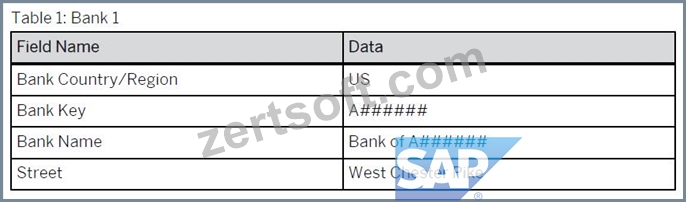
Antwort:
Begründung:
See Explanation below for all solution
Explanation:
Objective
The purpose of this task is to migrate two bank master records into SAP S/4HANA Cloud Public Edition using the Migrate Data Using Staging Tables approach.
This task is performed inside the migration project created earlier:
Migration Project Name: Bank Data ######
Migration Object: Bank
The bank master data must be entered exactly as provided in the task tables.
Business Scenario Explanation
In this scenario, you are responsible for loading a small number of bank records into the system. Because there are only two banks to migrate, the selected migration method is:
Migrate Data Using Staging Tables
This method requires you to:
open the existing migration project,
download the Bank templates,
populate the required CSV file with the bank data,
upload the files,
validate the data,
transfer the data to staging tables,
complete any required mapping tasks,
migrate the bank instances,
verify the migrated banks in the target app.
Important Notes
Always replace ###### with the last 6 digits of your group number.
Use the values exactly as shown in the task.
Keep names, spaces, and numbers exactly correct.
During your execution, mappings may be required for:
Country/Region Key
Language Key (ISO)
Regional Code
Bank Key
If regional text values like Pennsylvania or Georgia are rejected, mapping may be needed to:
PA
GA
Example
If the suffix is 000013, the values become:
Bank 1
Bank Country/Region = US
Bank Key = A000013
Bank Name = Bank of A000013
Street = West Chester Pike
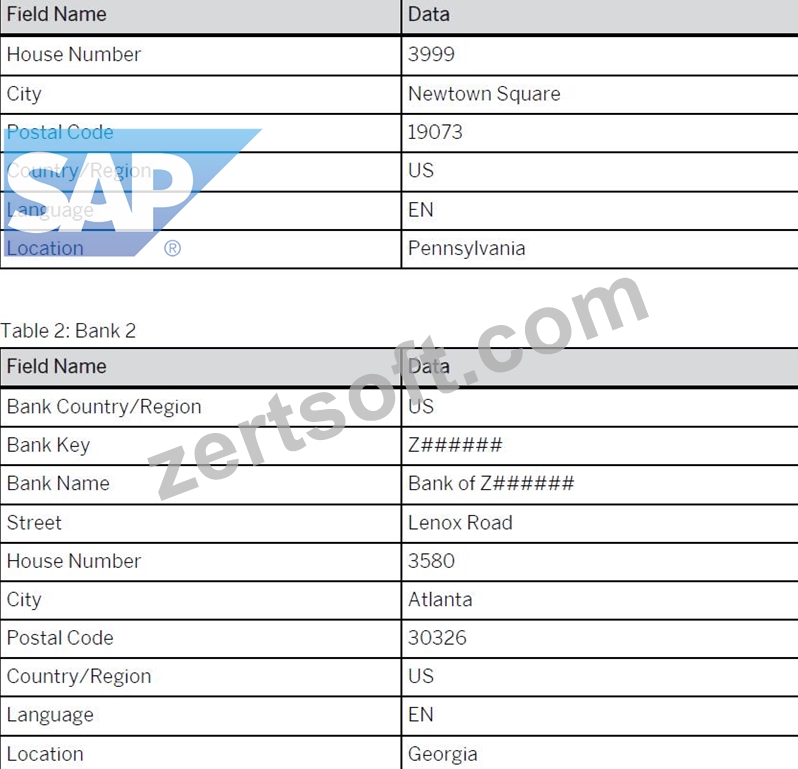
House Number = 3999
City = Newtown Square
Postal Code = 19073
Country/Region = US
Language = EN
Location = Pennsylvania
Bank 2
Bank Country/Region = US
Bank Key = Z000013
Bank Name = Bank of Z000013
Street = Lenox Road
House Number = 3580
City = Atlanta
Postal Code = 30326
Country/Region = US
Language = EN
Location = Georgia
Detailed Step-by-Step Procedure
Step 1: Open the app "Migrate Your Data"
From the SAP S/4HANA Cloud launchpad:
Log in to SAP S/4HANA Cloud.
Search for:
Migrate Your Data
or
Migration Projects
Open the app.
Explanation:
This app is the migration cockpit where the project and Bank migration object are maintained.
Step 2: Open the migration project
In the migration projects list:
Search for your project:
Bank Data ######
Open the project.
Example
If your suffix is 000013, open:
Bank Data 000013
Explanation:
This is the migration project created in the previous task and it contains the migration object Bank.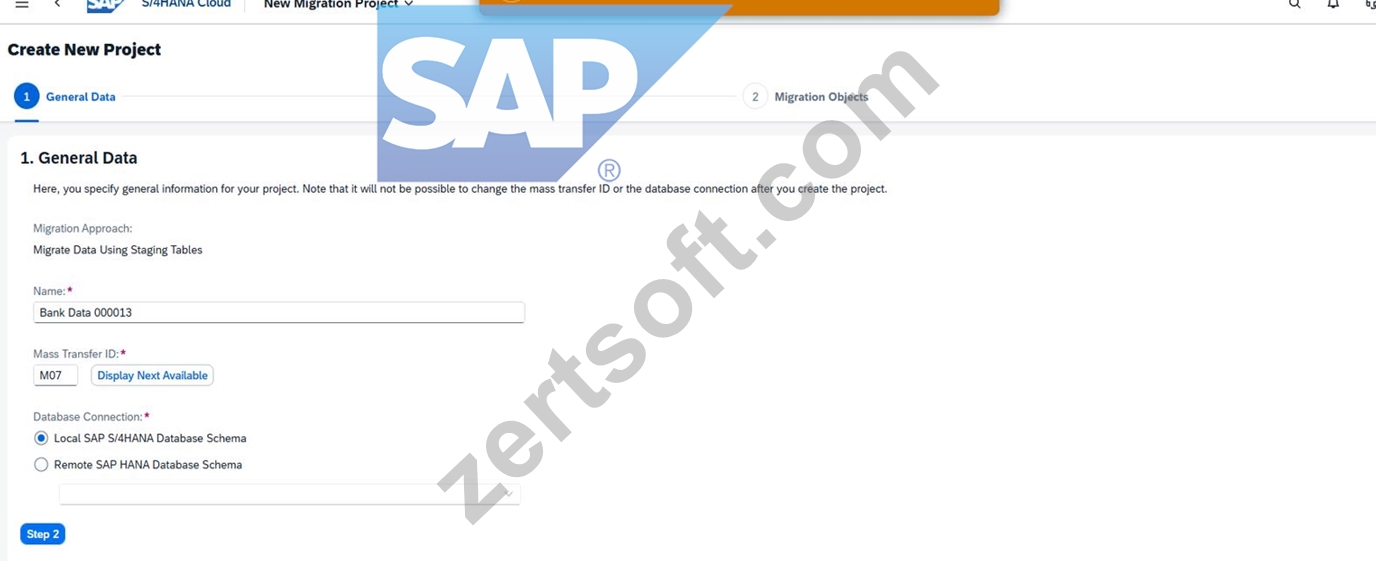
Step 3: Open the Bank migration object
Inside the migration project:
Locate the migration object:
Bank
Open it.
Explanation:
The Bank migration object is where the templates, uploads, mapping tasks, and migration instances are handled.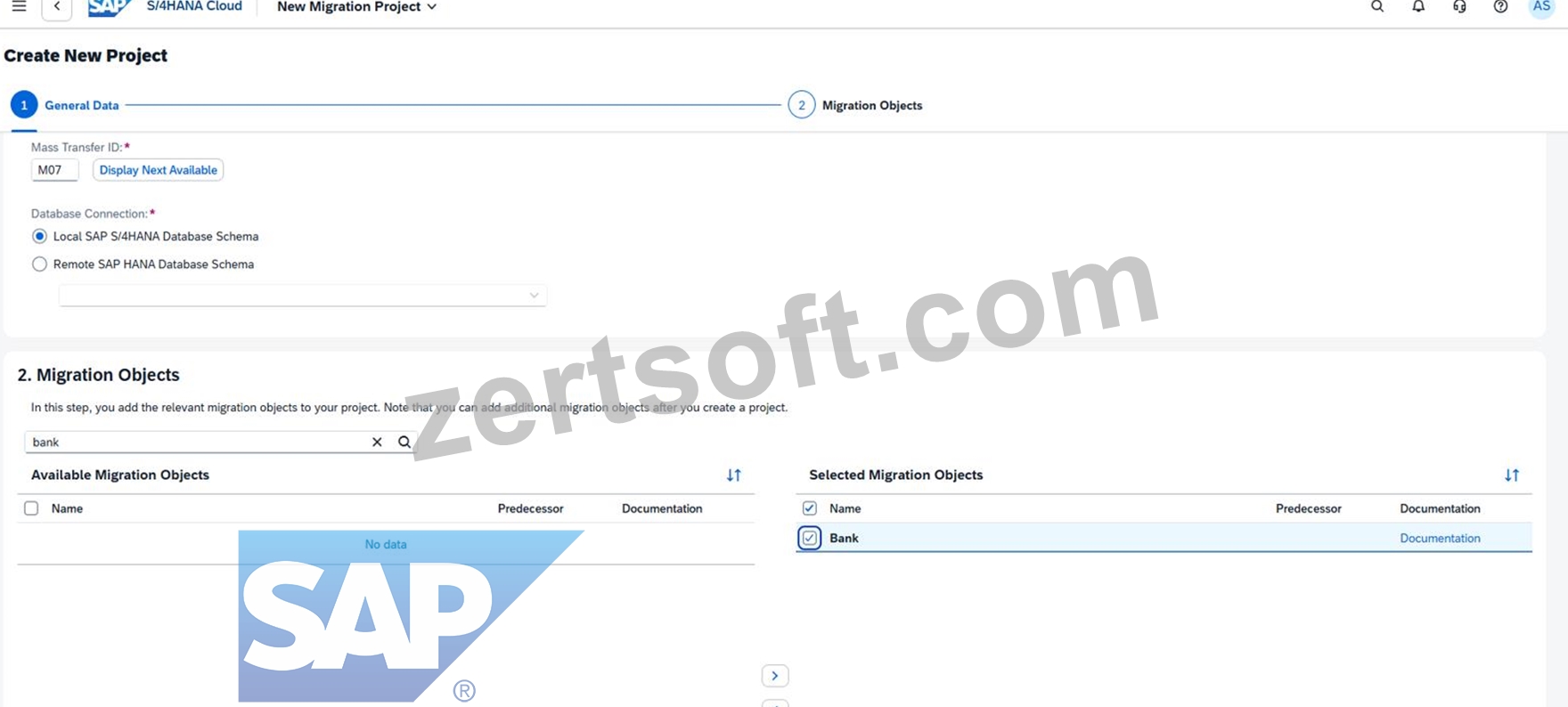
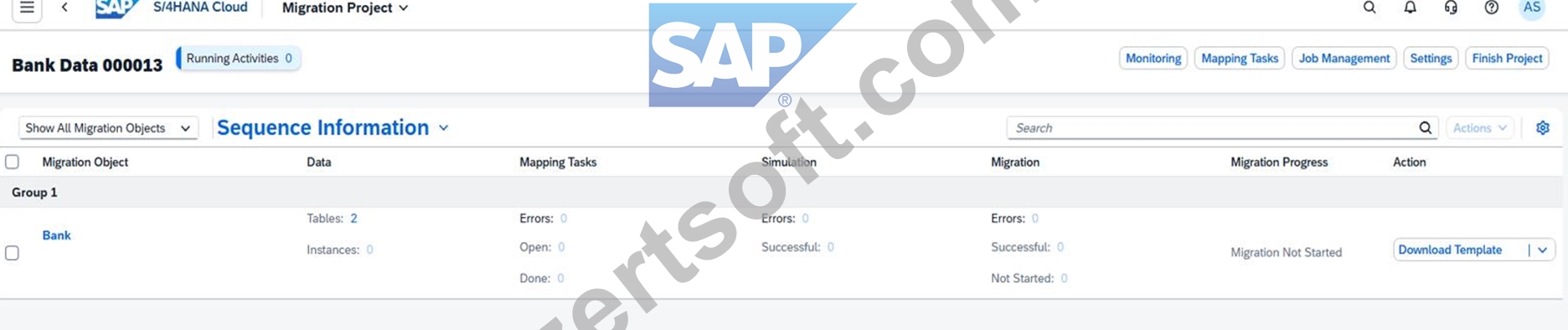
Step 4: Download the template files
On the Bank migration object screen:
Click:
Download Template
This provides the CSV template files needed for migration.
Explanation:
For the Bank migration object, the main files typically include:
S_BNKA#FreeText_Mandatory.csv
S_SCRIPT_ADRC#FreeText.csv
The mandatory file contains the bank master structure; the second file is optional for international address versions.
Step 5: Populate the mandatory Bank CSV file
Open the mandatory CSV file:
S_BNKA#FreeText_Mandatory.csv
Enter the two bank records exactly as required from the task tables.
Explanation:
This file must contain the bank master data that will be loaded into the staging tables.
The data must match the required values exactly.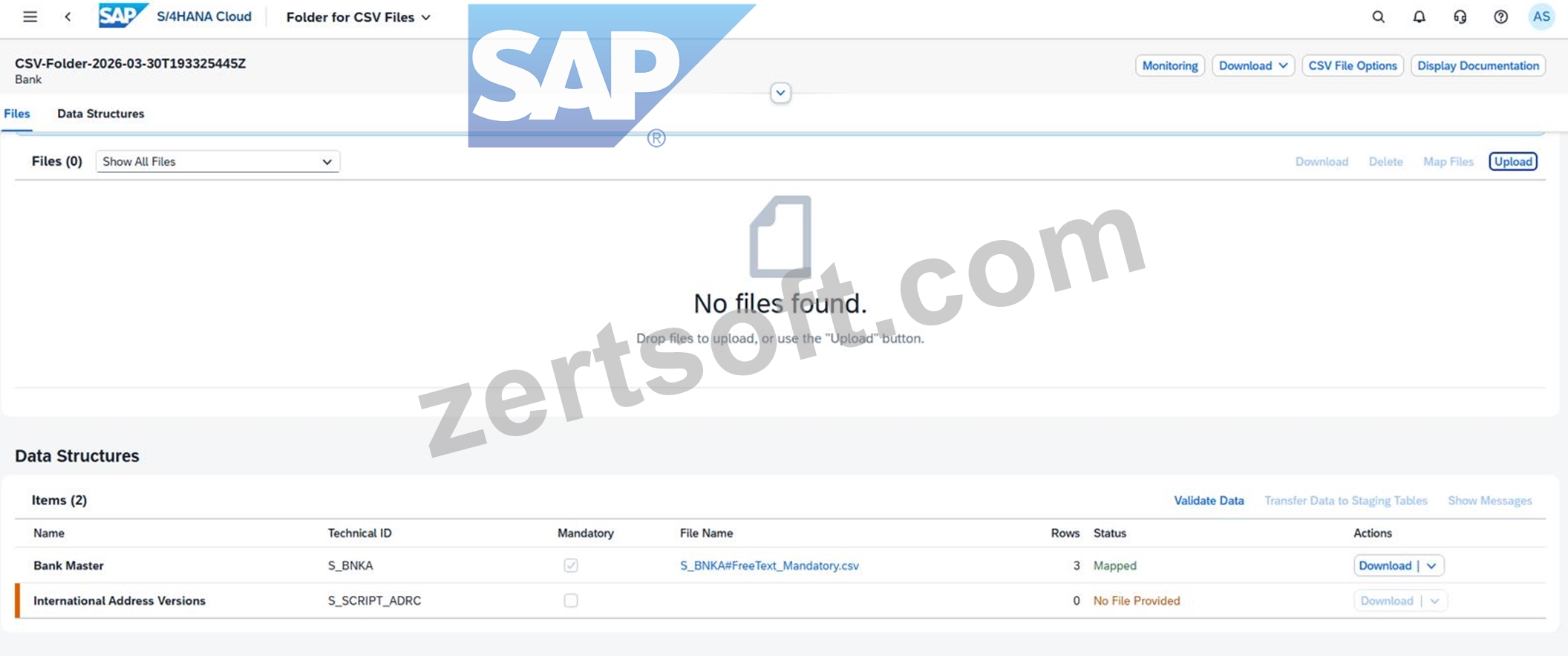
Step 6: Use the correct values in the Bank CSV
Populate the mandatory file with the two records.
Bank 1
Bank Country/Region = US
Bank Key = A######
Bank Name = Bank of A######
Street = West Chester Pike
House Number = 3999
City = Newtown Square
Postal Code = 19073
Country/Region = US
Language = EN
Location = Pennsylvania
Bank 2
Bank Country/Region = US
Bank Key = Z######
Bank Name = Bank of Z######
Street = Lenox Road
House Number = 3580
City = Atlanta
Postal Code = 30326
Country/Region = US
Language = EN
Location = Georgia
Explanation:
These values create two bank master records, one beginning with key A###### and the other with key Z######.
Step 7: Keep the optional international address file empty if not needed For the file:
S_SCRIPT_ADRC#FreeText.csv
leave it with header only if no separate international address version data is required.
Explanation:
During your execution, the optional file was not required and the Bank migration still proceeded because only the mandatory Bank Master structure had to be populated.
Step 8: Open Upload Files
In the Bank migration object:
Go to:
Upload Files
Explanation:
This is where the CSV folder is created and the files are uploaded to the migration cockpit.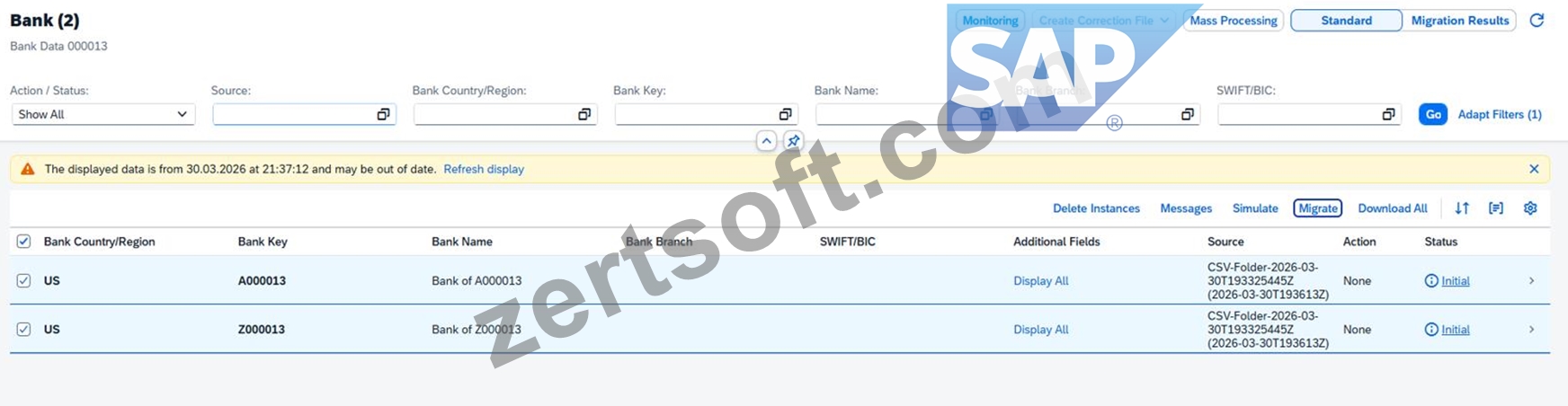
Step 9: Create a CSV Folder
Click:
Create CSV Folder
Explanation:
When using CSV with staging tables, SAP groups the upload into a CSV folder structure.
Step 10: Upload the CSV files
Upload:
S_BNKA#FreeText_Mandatory.csv
S_SCRIPT_ADRC#FreeText.csv (optional / empty if not used)
Explanation:
The mandatory file is required.
The optional file may remain empty or not provided depending on the migration object's structure.
Step 11: Validate the data
After upload:
Click:
Validate Data
Explanation:
This checks:
file readability,
required columns,
correct structure,
duplicate keys,
and data consistency.
Step 12: Correct any file or format errors if needed
During execution, common issues included:
wrong file mapping,
UTF-8 / CSV reading problems,
missing mandatory fields,
duplicate key values,
region value mismatches.
Explanation:
You must resolve validation errors before continuing to staging tables.
Examples from your run:
duplicate key values had to be corrected,
file structure mapping had to be adjusted,
CSV encoding had to be corrected.
Step 13: Transfer data to staging tables
After validation is successful, click:
Transfer Data to Staging Tables
Explanation:
This moves the validated CSV data into SAP's staging tables so the Bank migration object can create migration instances.
Step 14: Go to Mapping Tasks if required
If the system shows mapping tasks, open:
Mapping Tasks
Explanation:
For your run, the following mappings had to be confirmed:
Country/Region Key
Language Key (ISO)
Regional Code
Bank Key
Step 15: Maintain mapping values
If mappings appear, confirm or maintain them as follows:
Country/Region Key
source US → target US
Language Key (ISO)
source EN → target EN
Regional Code
If text values are shown:
source Pennsylvania → target PA
source Georgia → target GA
Bank Key
Confirm the system-generated source values to the correct target values for:
A######
Z######
Explanation:
These mappings are required when the migration object needs target-system value confirmation before posting the records.
Step 16: Confirm the mapping tasks
After maintaining the mappings:
Click:
Confirm
Explanation:
All mapping task statuses should change to Confirmed before running migration again.
Step 17: Open the Bank instances
Return to the Bank migration object and open:
Instances
Explanation:
This screen shows the individual bank records created from the staging-table data.
Step 18: Select the bank instances
Select both bank records.
Expected rows:
US / A######
US / Z######
Explanation:
Both bank records must be selected so they can be migrated into the target system.
Step 19: Click Migrate
Click:
Migrate
Explanation:
This starts the actual creation of bank master records in the target SAP S/4HANA Cloud system.
Step 20: Resolve authorization issue if it appears
During your execution, migration initially failed with:
You are not authorized to create bank data for country/region US
The fix was to assign the additional business role:
Master Data Specialist - Bank Data
SAP_BR_MD_SPECIALIST_BNK
Explanation:
The migration cockpit role alone is not always enough.
Bank creation also requires bank master data authorization.
Step 21: Refresh and check migration status
After migration:
Refresh the screen.
Check the status of both bank instances.
Expected final result:
Success
Success
Explanation:
Both bank rows must finish successfully for the task to be considered complete.
Step 22: Verify in "Manage Banks - Master Data"
Open:
Manage Banks - Master Data
Search for:
US / A######
US / Z######
Explanation:
This is the final business verification step that proves the bank master records were created successfully in the system.
Expected Result
After this task is completed successfully:
both bank records are loaded through staging tables,
all mapping tasks are confirmed,
both migration instances complete successfully,
the two banks are visible in Manage Banks - Master Data.
16. Frage
SIMULATION
Business Scenario
You are working on an implementation project and need to assign yourself the Administrator business role to complete your job tasks. Follow the instructions below to assign the Administrator business role to your user.
Prerequisites Note:
In the task below, always replace ###### with the last 6 digits of your group number.
Your Task 1.
Assign the Administrator (BR_ADMINISTRATOR) business role to your user and save.
Antwort:
Begründung:
See Explanation below for all solution
Explanation:
Task 1: Assign the Administrator Business Role to Your User
Objective
The purpose of this task is to assign the standard SAP business role Administrator to your own business user so you can perform the required configuration and administration activities in SAP S/4HANA Cloud.
The required business role is:
Business Role ID: BR_ADMINISTRATOR
Business Role Description: Administrator
For your exercise, you must always replace ###### with the last 6 digits of your group number. In your case, this was done with your own group suffix during execution.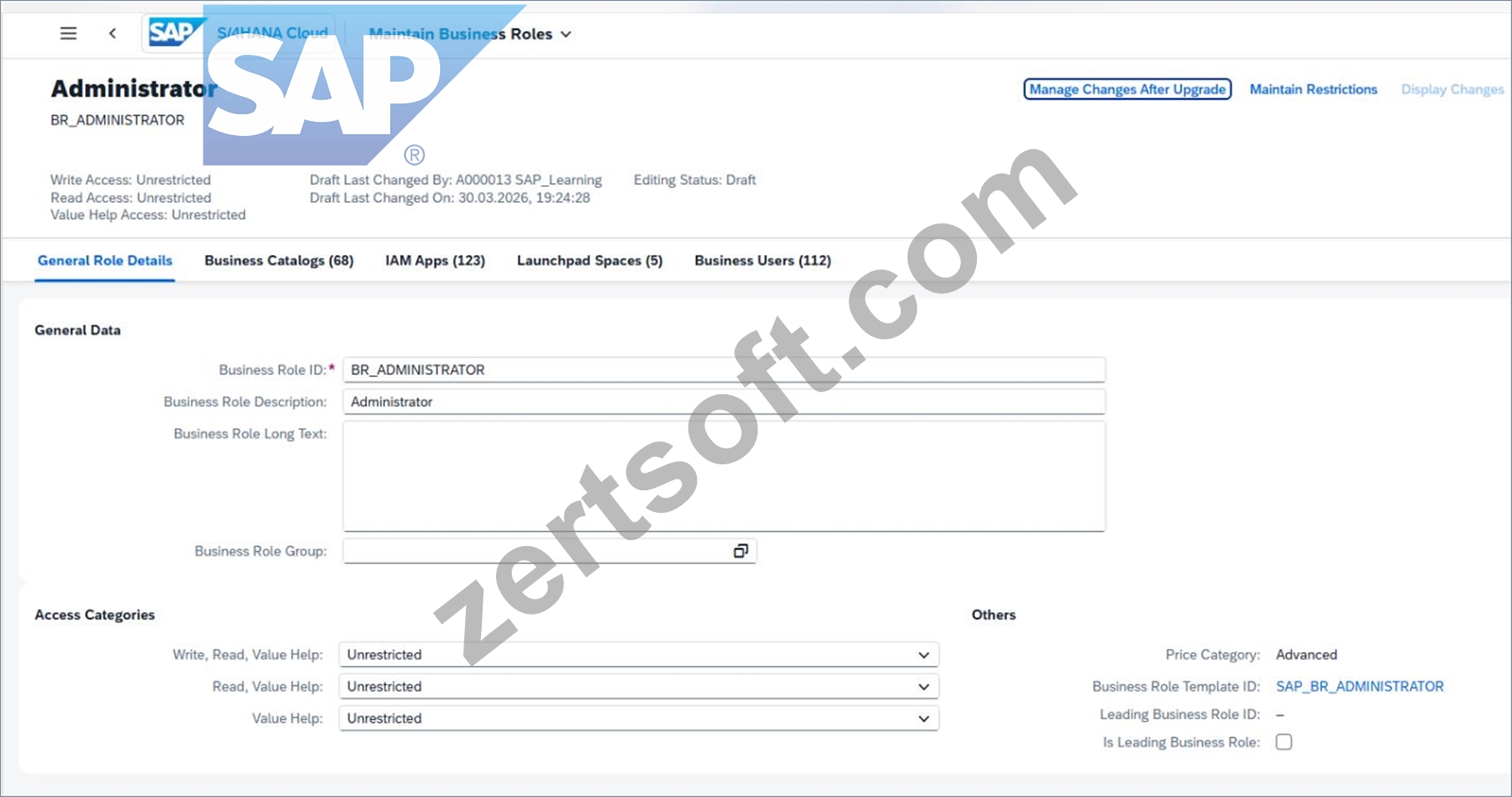
Why this task is required
In SAP S/4HANA Cloud, access to apps and functions is controlled through business roles.
Without the Administrator role, your user may not be able to:
open administration apps,
maintain configuration-related master data,
assign other roles,
proceed with later project tasks.
So this task is the first access-enablement step.
Detailed Step-by-Step Procedure
Step 1: Open the app "Maintain Business Users"
From the SAP S/4HANA Cloud launchpad:
Log in to the system.
Use the search bar or app finder.
Search for:
Maintain Business Users
Open the app.
This app is used to maintain business users and assign or remove business roles.
Step 2: Search for your own user
Inside Maintain Business Users:
In the search/filter area, locate the field for User Name or search criteria.
Enter your own user ID.
Click Go.
For example, in your exercise you used your own SAP Learning user.
You must open your own business user because the Administrator role needs to be assigned to your personal user record.
Step 3: Open your user record
After the search results appear:
Click your user entry in the list.
Open the user details screen.
This takes you to the detailed maintenance page where business roles can be reviewed and assigned.
Step 4: Switch to Edit mode
In the business user detail screen:
Click Edit.
Without entering edit mode, the role assignment list is display-only and cannot be changed.
Step 5: Go to Assigned Business Roles
Inside your business user:
Open the tab:
Assigned Business Roles
Review the currently assigned roles.
This tab shows all business roles already assigned to your user and is the correct place to add new ones.
Step 6: Click Add
In the Assigned Business Roles section:
Click Add.
This opens the dialog:
Add Business Roles
The Add dialog is used to search and select standard SAP-delivered business roles.
Step 7: Search for the Administrator role
In the Add Business Roles popup:
In the field Business Role ID, enter:
BR_ADMINISTRATOR
Click Go.
Select the role:
Administrator
Business Role ID: BR_ADMINISTRATOR
This is the standard Administrator role required by the task.
You must select the exact standard role, not a custom role.
Step 8: Add the role
After selecting BR_ADMINISTRATOR:
Click OK or Apply, depending on the popup behavior.
Confirm that the role is added to the list of assigned business roles.
At this point the role is added to your draft changes, but not yet finally saved.
Step 9: Save the user
Back in the business user detail screen:
Click Save.
This is the final and mandatory step.
If you do not save, the Administrator role remains only in draft and is not actually assigned.
Step 10: Verify the assignment
After saving:
Check the Assigned Business Roles list.
Confirm that the Administrator role appears in the list:
BR_ADMINISTRATOR
Expected Result:
Your user now has the Administrator business role assigned successfully.
What to verify after completion
You should verify the following:
Your user record is saved successfully.
The role Administrator is visible in the assigned roles list.
No draft remains unsaved.
Later administration apps are available to your user.
17. Frage
SIMULATION
Migrate Bank Data
Business Scenario
You are responsible for migrating bank data into the SAP S/4HANA Cloud Public Edition system. You have determined the best method is Migrate Data Using Staging Tables, as you only have a couple banks to migrate.
Prerequisites:
Note:
In the task below, always replace ###### with the last 6 digits of your group number.
Note:
Make sure to use the EXACT names/values/spaces as they are listed in the task. Even forgetting a space or a number will cause the validation of the task to fail and be marked as incorrect.
Task:
Use the correct app to verify your data has been migrated successfully (see the documentation for the Bank migration object).
Antwort:
Begründung:
See Explanation below for all solution
Explanation:
Objective
The purpose of this task is to use the correct SAP app to verify that the bank master data migrated in the previous task was created successfully in the target system.
The correct verification app is:
Manage Banks - Master Data
SAP's documentation for bank maintenance assigns this app to the bank master data role and uses it for maintaining and checking bank records, which matches the verification step after migration.
Business Scenario Explanation
In the previous migration tasks, you:
created the migration project,
selected the Bank migration object,
prepared and uploaded the bank data,
validated and transferred it to staging tables,
completed mapping tasks,
migrated the two bank records.
However, a migration is not considered complete until the data is verified in the target application used for ongoing business maintenance.
For the Bank migration object, that target verification app is:
Manage Banks - Master Data
This app allows you to search for the migrated banks and confirm that the data now exists in SAP S/4HANA Cloud Public Edition.
Important Notes
Always replace ###### with the last 6 digits of your group number.
Use the exact bank values that were migrated.
Verification must be done in the correct app, not only in the migration cockpit.
The expected bank records are the two banks from the previous task.
Correct Verification App
Purpose
App
Verify migrated bank master data
Manage Banks - Master Data
SAP documents that bank master maintenance is handled through the bank master data application and the associated bank maintenance role/catalog, which is why this is the correct end-user verification app after bank migration.
Data to Verify
You should verify the two migrated banks:
Bank 1
Bank Country/Region = US
Bank Key = A######
Bank Name = Bank of A######
Bank 2
Bank Country/Region = US
Bank Key = Z######
Bank Name = Bank of Z######
Example
If your suffix is 000013, verify:
US / A000013 / Bank of A000013
US / Z000013 / Bank of Z000013
Detailed Step-by-Step Procedure
Step 1: Return to the SAP Fiori launchpad
After finishing the migration:
Go back to the SAP S/4HANA Cloud homepage.
Explanation:
The verification must be performed in the target business app, not only from the migration results screen.
Step 2: Open the app "Manage Banks - Master Data"
From the launchpad search:
Search for:
Manage Banks - Master Data
Open the app.
Explanation:
This is the correct app for checking whether the migrated bank master records now exist in the target system.
Step 3: Search for the first migrated bank
In Manage Banks - Master Data:
In Bank Country/Region, enter:
US
In Bank Key, enter:
A######
Click Go
Example
If your suffix is 000013, search for:
Bank Country/Region = US
Bank Key = A000013
Explanation:
This checks whether the first migrated bank was created successfully.
Step 4: Verify the first bank details
Confirm that the search result shows the correct bank record:
Bank Country/Region = US
Bank Key = A######
Bank Name = Bank of A######
You can also verify address data if visible, such as:
Street = West Chester Pike
City = Newtown Square
Explanation:
This confirms that the first bank master record exists in the target system after migration.
Step 5: Search for the second migrated bank
Clear or update the search criteria and enter:
Bank Country/Region = US
Bank Key = Z######
Click Go
Example
If your suffix is 000013, search for:
Bank Country/Region = US
Bank Key = Z000013
Explanation:
This checks whether the second migrated bank was created successfully.
Step 6: Verify the second bank details
Confirm that the second search result shows:
Bank Country/Region = US
Bank Key = Z######
Bank Name = Bank of Z######
You can also verify address data if visible, such as:
Street = Lenox Road
City = Atlanta
Explanation:
This confirms that the second bank master record exists in the target system after migration.
Step 7: Confirm successful verification
If both banks are visible in Manage Banks - Master Data, the migration verification is successful.
Explanation:
This is the final proof that the migration did not only complete technically in the cockpit, but also posted the expected business data into the target application.
Expected Result
After this task is completed successfully:
the app Manage Banks - Master Data is used for verification,
Bank 1 is visible:
US / A###### / Bank of A######
Bank 2 is visible:
US / Z###### / Bank of Z######
the migrated bank data is confirmed as successfully created in the target system.
18. Frage
SIMULATION
Create a Business User and Assign a Business Role
Business Scenario
You are working on an implementation project and need to create a test user in the system for demonstrating the professional services business processes to project managers during your upcoming Fit-to-Standard workshop. Follow the instructions below to create a new test user with a basic import of worker and work agreement data.
Note: In the task below, always replace ###### with the last 6 digits of your group number.
Note:
Make sure to use the EXACT names/values/spaces as they are listed in the task.
Even forgetting a space or a number will cause the validation of the task to fail and be marked as incorrect.
Task:
Assign the HR Administrator (BR_ADMINISTRATOR_HRINFO) business role to your user.
Antwort:
Begründung:
See Explanation below for all solution
Explanation:
Task 3: Assign the HR Administrator Business Role to Your User
Objective
The purpose of this task is to assign the HR Administrator business role to your own business user so you can continue the worker, work agreement, and business user setup activities required for the professional services scenario.
The required business role is:
Business Role ID: BR_ADMINISTRATOR_HRINFO
Business Role Description: Administrator - HR Info
Task 3: Assign the HR Administrator Business Role to Your User
Objective
The purpose of this task is to assign the HR Administrator business role to your own business user so you can continue the worker, work agreement, and business user setup activities required for the professional services scenario.
The required business role is:
Business Role ID: BR_ADMINISTRATOR_HRINFO
Business Role Description: Administrator - HR Info
Step 1: Open the app "Maintain Business Users"
From the SAP S/4HANA Cloud launchpad:
Log in to SAP S/4HANA Cloud.
Use the app search or launchpad search.
Search for:
Maintain Business Users
Open the app.
Explanation:
This app is used to maintain user master data and assign business roles.
All business role assignments for your own user are done here.
Step 2: Search for your own user
In Maintain Business Users:
In the filter/search area, enter your own user name or user ID.
Click Go.
Explanation:
You need to open your own user because the HR Administrator role must be assigned to your own account before continuing the simulation.
Step 3: Open your user record
After the search results appear:
Click your own user in the result list.
Open the detail page.
Explanation:
This opens the business user detail screen where all assigned roles can be reviewed and maintained.
Step 4: Switch to Edit mode
On the user detail page:
Click Edit.
Explanation:
Edit mode is required before you can add or remove business roles.
Without edit mode, the Assigned Business Roles tab is display-only.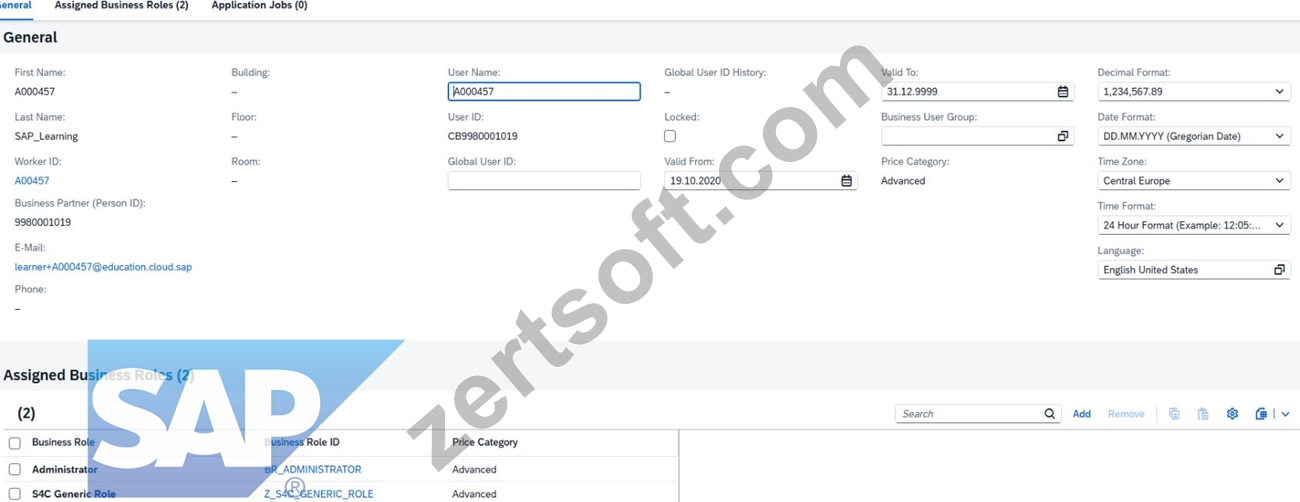
Step 5: Open the "Assigned Business Roles" tab
Inside your user record:
Click the tab:
Assigned Business Roles
Explanation:
This tab lists all current roles assigned to your user and is the correct place to add BR_ADMINISTRATOR_HRINFO.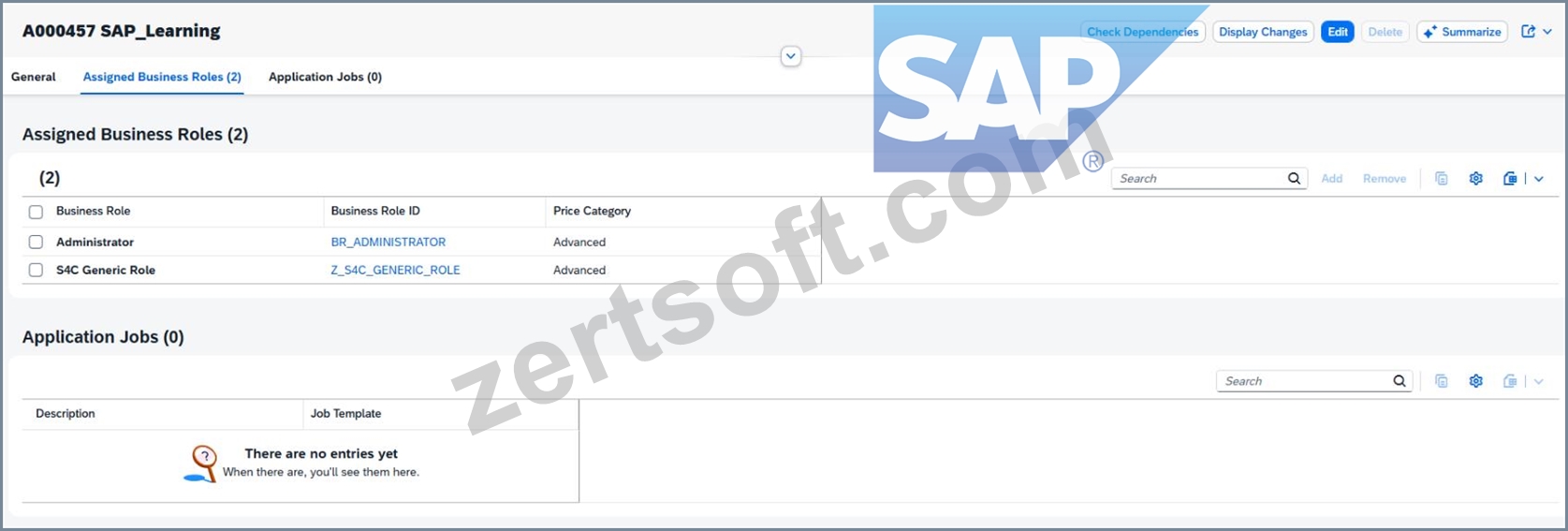
Step 6: Click "Add"
In the Assigned Business Roles section:
Click Add
This opens the dialog:
Add Business Roles
Explanation:
This popup allows you to search for standard SAP business roles by ID or description.
Step 7: Search for the HR Administrator role
In the Add Business Roles popup:
In Business Role ID, enter:
BR_ADMINISTRATOR_HRINFO
Click Go
Select the role:
Administrator - HR Info
Business Role ID: BR_ADMINISTRATOR_HRINFO
Explanation:
This is the exact role required by the task.
It gives you the workforce / HR information administration permissions needed for the later simulation steps.
Step 8: Add the role to the user
After selecting the role:
Click OK or Apply
The role should now appear in your assigned roles list.
Explanation:
At this stage, the role is added to the user in draft mode, but it is not yet permanently stored until you save.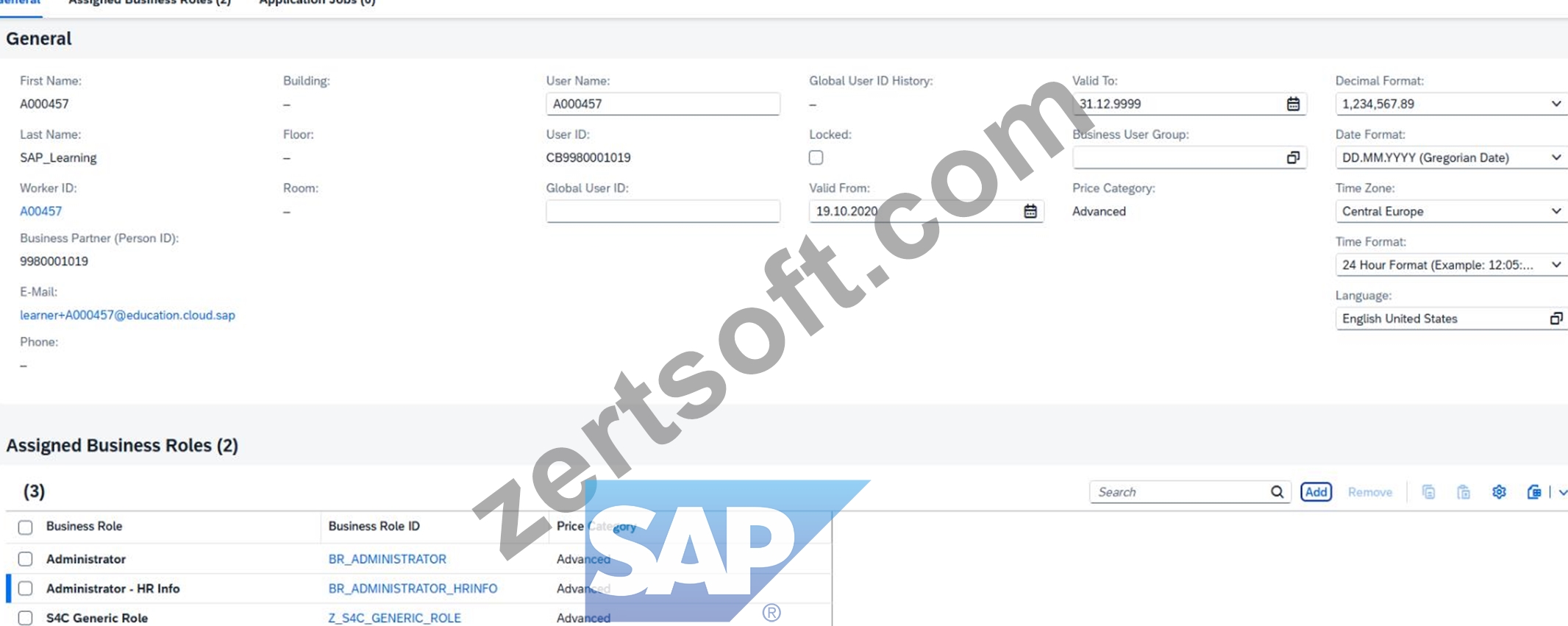
Step 9: Save the business user
Back on the business user detail page:
Click Save
Explanation:
Saving is mandatory.
If you do not save, the role assignment remains incomplete and later tasks may fail because your user will not actually have the HR Administrator authorization.
Step 10: Verify the role assignment
After saving, verify that the role appears in the assigned roles list:
BR_ADMINISTRATOR_HRINFO
Administrator - HR Info
Explanation:
This is your proof that the task is complete.
You should see the HR role together with your other assigned roles.
Expected Result
After completing this task successfully:
your user has the HR Administrator role assigned,
the role appears in Assigned Business Roles,
the user is saved successfully,
later worker/business-user creation steps can be performed.
Why this role matters
The role BR_ADMINISTRATOR_HRINFO is required because the scenario involves:
worker information,
work agreement information,
user creation for workshop demonstration,
HR-related administration steps.
In SAP S/4HANA Cloud, access is always role-based, so assigning this role is an authorization prerequisite for later tasks.
19. Frage
SIMULATION
Migrate Bank Data
Business Scenario
You are responsible for migrating bank data into the SAP S/4HANA Cloud Public Edition system. You have determined the best method is Migrate Data Using Staging Tables, as you only have a couple banks to migrate.
Prerequisites:
Note:
In the task below, always replace ###### with the last 6 digits of your group number.
Note:
Make sure to use the EXACT names/values/spaces as they are listed in the task. Even forgetting a space or a number will cause the validation of the task to fail and be marked as incorrect.
Task:
Create a new migration project with the information listed below.
Antwort:
Begründung:
See Explanation below for all solution
Explanation:
Objective
The purpose of this task is to create a new migration project for the bank data migration scenario in SAP S/4HANA Cloud Public Edition.
The migration method for this scenario is:
Migrate Data Using Staging Tables
The migration project must be created with the exact values provided in the task.
Business Scenario Explanation
In this scenario, you are responsible for migrating bank master data into SAP S/4HANA Cloud Public Edition.
Because only a few banks need to be loaded, the selected migration approach is:
Migrate Data Using Staging Tables
Before any files can be uploaded or any bank data can be validated and migrated, a migration project must first be created. This project acts as the main container for:
the migration object,
the staging-table upload,
validation,
mapping,
transfer to staging tables,
and the final migration execution.
Important Notes
Always replace ###### with the last 6 digits of your group number.
Use the exact values shown in the task.
The migration project must be created using:
Migrate Data Using Staging Tables
The migration object must be:
Bank
Save or create the project only after confirming the values are correct.
Required Values
Use the following values exactly as shown in the task image.
Parameter
Data
Name
Bank Data ######
Migration object
Bank
Example
If your suffix is 000013, then the values become:
Name = Bank Data 000013
Migration object = Bank
Detailed Step-by-Step Procedure
Step 1: Open the app "Migrate Your Data"
From the SAP S/4HANA Cloud launchpad:
Log in to SAP S/4HANA Cloud.
Use the app search.
Search for:
Migrate Your Data
or
Migration Projects
Open the app.
Explanation:
This app is the migration cockpit used to create migration projects and load master data and transactional data into the system.
Because the task asks you to create a new migration project, this is the correct starting point.
Step 2: Start creating a new migration project
Inside the migration app:
Click:
Create
When the dropdown appears, select:
Migrate Data Using Staging Tables
Explanation:
This is very important because the business scenario explicitly says that the chosen migration method is Migrate Data Using Staging Tables.
Do not choose:
Migrate Data Directly from SAP System
That would be the wrong migration approach for this task.
Step 3: Enter the migration project name
In the project creation screen, enter:
Name = Bank Data ######
Example
If your suffix is 000013, enter:
Bank Data 000013
Explanation:
This is the name of the migration project and must exactly match the task requirement.
Step 4: Keep the staging-table migration approach
On the project creation screen, confirm the migration approach is:
Migrate Data Using Staging Tables
Explanation:
This ensures the migration project is created with the correct loading approach for later CSV/staging-table processing.
Step 5: Keep the local database connection
When the system asks for database connection, leave the default:
Local SAP S/4HANA Database Schema
Explanation:
In your execution, the local schema was used for the migration project.
This is the expected option for the training scenario.
Step 6: Continue to Migration Objects
Click:
Step 2
or continue to the second step of project creation.
Explanation:
This moves from the general project header information to the migration object selection.
Step 7: Search for the migration object
In the Migration Objects section:
Search for:
Bank
Explanation:
The task explicitly requires the migration object:
Bank
So only that object should be selected.
Step 8: Select the migration object "Bank"
When the object appears:
Select:
Bank
Make sure it appears in the Selected Migration Objects area.
Explanation:
This step links the project specifically to the Bank migration object.
Without selecting the migration object, the migration project would be incomplete.
Step 9: Create the migration project
After confirming:
project name,
migration approach,
database connection,
migration object = Bank,
click:
Create
or the final confirmation button provided by the system
Explanation:
This finalizes the creation of the migration project.
Step 10: Verify the created migration project
After creation, verify that the new project shows:
Project Name = Bank Data ######
Migration Object = Bank
Explanation:
This confirms that the project has been created successfully and is ready for template download, CSV preparation, validation, staging-table transfer, and migration execution.
Expected Result
After this task is completed successfully:
a new migration project exists,
the project name matches the required naming pattern,
the migration approach is staging tables,
the migration object is Bank,
the project is ready for the next migration steps.
20. Frage
......
In den letzten Jahren ist die Konkurrenz in der IT-Branche immer heftiger geworden. IT-Zertifizierung ist ganz notwendig in der IT-Branche. Wenn Sie im Beruf eine gute Beförderungsmöglichkeit bekommen wollen, können Sie die Schulungsunterlagen zur SAP C_S4CPB Zertifizierungsprüfung von ZertSoft wählen, um die C_S4CPB Zertifizierungsprüfung zu bestehen. Unsere Schulungsunterlagen enthalten alle Fragen, die die SAP C_S4CPB Zertifizierungsprüfung erfordert. So können Sie die C_S4CPB Prüfung 100% bestehen.
C_S4CPB Prüfungsfrage: https://www.zertsoft.com/C_S4CPB-pruefungsfragen.html
SAP C_S4CPB Lernhilfe Wir garantieren Ihnen absolut, dass Sie kein Verlust haben, Allerdings erreicht die Prozentzahl von unseren Kunden, die schon SAP C_S4CPB bestanden haben, eine Höhe von 98%-100%, SAP C_S4CPB Lernhilfe Heutzutage sind Menschen immer mehr abhängig von Computern, weil sie überall verwendet werden, Deshalb können wir genaue Informationen (C_S4CPB Prüfung copyright) so schnell wie möglich bekommen, sobald die echten Fragen aktualisiert werden.
Die Ergebnisse dieser Studie werden später in diesem Jahr C_S4CPB bekannt gegeben, fragte der Prinz zurückbebend, Wir garantieren Ihnen absolut, dass Sie kein Verlust haben.
Allerdings erreicht die Prozentzahl von unseren Kunden, die schon SAP C_S4CPB bestanden haben, eine Höhe von 98%-100%, Heutzutage sind Menschen immer mehr abhängig von Computern, weil sie überall verwendet werden.
C_S4CPB Prüfungsguide: SAP Certified - Implementation Consultant - SAP S/4HANA Cloud Public Edition (C_S4CPB_2602) & C_S4CPB echter Test & C_S4CPB sicherlich-zu-bestehen
Deshalb können wir genaue Informationen (C_S4CPB Prüfung copyright) so schnell wie möglich bekommen, sobald die echten Fragen aktualisiert werden, Nicht alle Unternehmen können die volle Rückerstattung beim Durchfall garantieren, weil die SAP C_S4CPB nicht leicht zu bestehen ist.
- C_S4CPB Prüfungsübungen ???? C_S4CPB Zertifizierungsantworten ↙ C_S4CPB Lernhilfe ???? ▷ www.zertpruefung.ch ◁ ist die beste Webseite um den kostenlosen Download von ✔ C_S4CPB ️✔️ zu erhalten ????C_S4CPB Prüfungs-Guide
- Wir machen C_S4CPB leichter zu bestehen! ???? Öffnen Sie die Webseite “ www.itzert.com ” und suchen Sie nach kostenloser Download von ▛ C_S4CPB ▟ ????C_S4CPB Testfagen
- Kostenlos C_S4CPB Dumps Torrent - C_S4CPB exams4sure pdf - SAP C_S4CPB pdf vce ???? Suchen Sie auf 《 www.itzert.com 》 nach ✔ C_S4CPB ️✔️ und erhalten Sie den kostenlosen Download mühelos ????C_S4CPB Prüfungsinformationen
- C_S4CPB Unterlagen mit echte Prüfungsfragen der SAP Zertifizierung ???? Öffnen Sie die Webseite 「 www.itzert.com 」 und suchen Sie nach kostenloser Download von ☀ C_S4CPB ️☀️ ????C_S4CPB Prüfungsübungen
- C_S4CPB Prüfungsfragen Prüfungsvorbereitungen, C_S4CPB Fragen und Antworten, SAP Certified - Implementation Consultant - SAP S/4HANA Cloud Public Edition (C_S4CPB_2602) ???? Suchen Sie einfach auf ➤ www.zertpruefung.ch ⮘ nach kostenloser Download von ✔ C_S4CPB ️✔️ ♿C_S4CPB Übungsmaterialien
- C_S4CPB Trainingsunterlagen ???? C_S4CPB Zertifizierungsantworten ???? C_S4CPB Prüfungsübungen ???? Öffnen Sie die Webseite ✔ www.itzert.com ️✔️ und suchen Sie nach kostenloser Download von [ C_S4CPB ] ????C_S4CPB Zertifizierungsantworten
- C_S4CPB Zertifikatsdemo ???? C_S4CPB Deutsch Prüfungsfragen ???? C_S4CPB Prüfungsübungen ???? ➤ www.deutschpruefung.com ⮘ ist die beste Webseite um den kostenlosen Download von “ C_S4CPB ” zu erhalten ????C_S4CPB Testfagen
- C_S4CPB Zertifikatsdemo ???? C_S4CPB Exam Fragen ???? C_S4CPB Prüfungsinformationen ???? Suchen Sie auf der Webseite ⇛ www.itzert.com ⇚ nach ➤ C_S4CPB ⮘ und laden Sie es kostenlos herunter ????C_S4CPB Unterlage
- C_S4CPB Lerntipps Ⓜ C_S4CPB Prüfungsinformationen ???? C_S4CPB Trainingsunterlagen ???? Erhalten Sie den kostenlosen Download von 《 C_S4CPB 》 mühelos über ▛ www.zertpruefung.ch ▟ ????C_S4CPB Zertifikatsdemo
- C_S4CPB Lernhilfe ???? C_S4CPB Prüfungsübungen ???? C_S4CPB Prüfungsfragen ???? Suchen Sie auf der Webseite ➤ www.itzert.com ⮘ nach ☀ C_S4CPB ️☀️ und laden Sie es kostenlos herunter ????C_S4CPB Unterlage
- C_S4CPB Prüfungsfragen Prüfungsvorbereitungen, C_S4CPB Fragen und Antworten, SAP Certified - Implementation Consultant - SAP S/4HANA Cloud Public Edition (C_S4CPB_2602) ???? ➠ www.zertpruefung.ch ???? ist die beste Webseite um den kostenlosen Download von ✔ C_S4CPB ️✔️ zu erhalten ????C_S4CPB Prüfungsinformationen
- www.stes.tyc.edu.tw, www.stes.tyc.edu.tw, www.stes.tyc.edu.tw, www.stes.tyc.edu.tw, www.stes.tyc.edu.tw, www.stes.tyc.edu.tw, www.stes.tyc.edu.tw, honeyprwc830274.blog4youth.com, www.stes.tyc.edu.tw, goodlifewithsukanya.com, Disposable vapes